The Logistics of Expansion: Beyond Earth-Bound Economics
\n\n
The history of commerce is a history of shrinking distance. From the Silk Road to the containerization of global shipping in the 1950s, the primary constraint on human enterprise has always been the friction of geography. Interplanetary shipping represents the final frontier of this evolution, shifting the paradigm from ‘distribution’ to ‘orbital mechanics.’ For the modern enterprise, this is not science fiction; it is the ultimate stress test for operational excellence and supply chain resilience.
\n\n
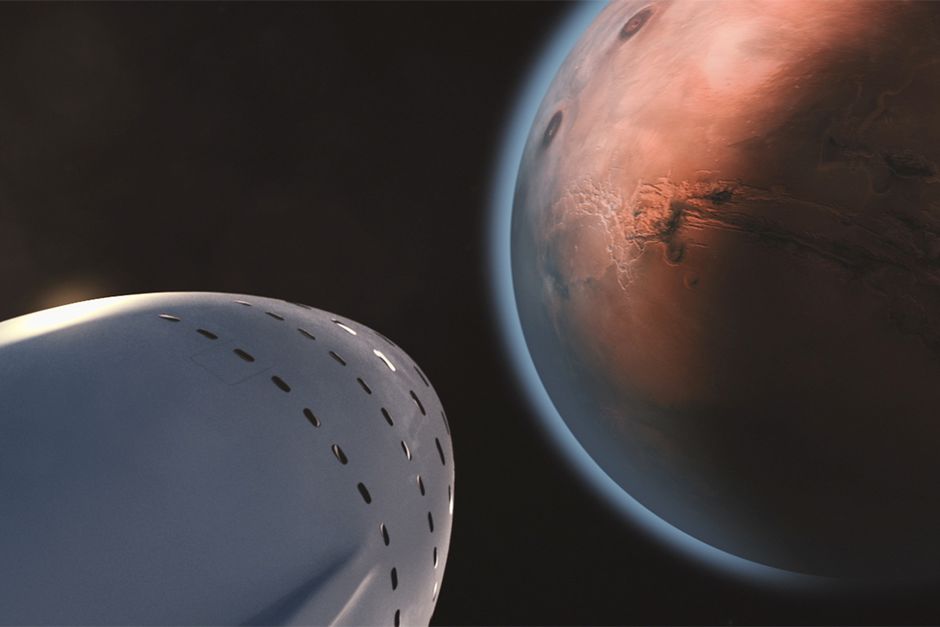
When you move cargo between planetary bodies, the traditional metrics of time and cost are replaced by the brutal realities of the Tsiolkovsky rocket equation. In this environment, every kilogram is a strategic liability. Leaders who fail to grasp the nuance of mass-to-orbit costs will find themselves bankrupt long before they reach the Martian surface. Success in this domain requires a fundamental pivot in decision-making: you are no longer shipping products; you are shipping physics.
\n\n
The Economics of Escaping the Gravity Well
\n\n
Terrestrial logistics rely on infrastructure that already exists—roads, ports, and air corridors. Interplanetary shipping requires the creation of infrastructure in a vacuum. The cost of launching a payload into Low Earth Orbit (LEO) remains the highest barrier to entry. To achieve viability, companies must move away from disposable hardware toward a model of full reusability and in-situ resource utilization (ISRU).
\n\n
This is where strategy becomes inseparable from engineering. If your business model depends on shipping water or construction materials from Earth to Mars, your unit economics are fundamentally broken. The high-performance approach is to treat the destination as a manufacturing hub, not a terminal. You don’t ship the finished good; you ship the capability to produce it locally.
\n\n
The Shift to Autonomous Execution
\n\n
Communication latency is the silent killer of traditional management styles. When a signal takes minutes to travel between planets, command-and-control structures collapse. You cannot micromanage an interplanetary supply chain from a headquarters in New York or London. Success demands the delegation of execution to autonomous systems.
\n\n
We are entering an era where AI is not just an administrative tool; it is the primary operator of interplanetary transit. These systems must manage trajectory corrections, docking maneuvers, and cargo prioritization without human intervention. This forces a shift in leadership: your role is no longer to direct the ‘how,’ but to define the ‘what’ and the ‘why’—setting the parameters within which autonomous agents operate.
\n\n
Risk Management in a High-Stakes Environment
\n\n
In terrestrial logistics, a delayed shipment is an inconvenience. In interplanetary shipping, a delayed shipment can result in the loss of an entire mission. This elevates the stakes of risk management to an existential level. High-performance thinking in this sector requires a ‘design for failure’ mindset. If a component fails millions of miles from a supply depot, the system must be modular, redundant, and repairable by either robotics or pre-positioned automation.
\n\n
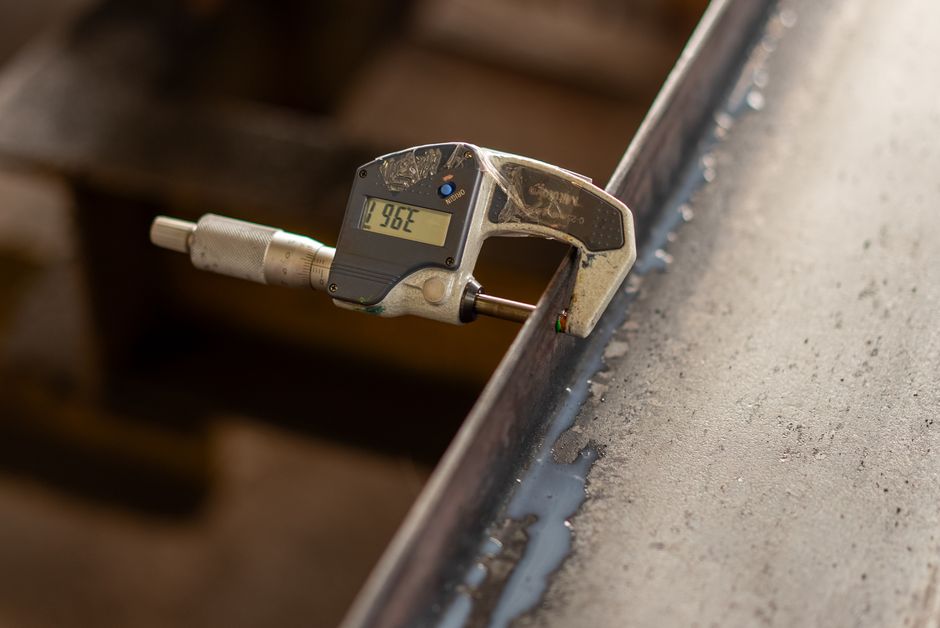
Leaders who master this level of complexity are those who prioritize deep, systemic visibility. You must be able to track every sub-assembly and performance metric with absolute clarity. Ambiguity is the enemy of survival in deep space. By applying the same rigorous high-performance thinking to space logistics as one would to a mission-critical terrestrial production line, companies can mitigate the inherent volatility of interplanetary transport.
\n\n
The Future of Interplanetary Commerce
\n\n
The companies that dominate the next century will be those that view interplanetary shipping as an extension of their core competency, not a side project. Whether it is mining asteroids for rare metals or establishing research outposts, the principles remain the same: reduce mass, increase autonomy, and optimize for local resource capture. Those who treat space as an extension of their existing supply chain will thrive; those who view it as a separate, ‘special’ problem will be left behind by the pace of innovation.